
October 21, 2021
Let us ask you this: Does your marketing team review and define your company’s marketing strategy annually? If not, then now is a good time to start.
🔎 Learn more about YouLead’s Strategic Marketing Plan creation service
What is a strategic marketing plan?
A strategic marketing plan is one of the most powerful tools available to any company, regardless of its size or industry. A strategic plan is a reference document used by companies to define their marketing strategies over a specific period of time, typically one year.
In fact, this is a key document in that it sets the course for marketing teams and efforts to achieve established business objectives. A strategic plan exists precisely to provide clarity on what the company intends to do—in a realistic and tangible way—to achieve those goals (whether they involve market penetration, growth, or any other objectives).
To this end, and depending on the strategic plan structure adopted by each company—which can vary— a strategic marketing plan generally consolidates information about the company (mission and vision, current marketing initiatives), business objectives, market research and competitive analysis, identification of buyer personas, a description of proposed tactics and deliverables, and the availablebudget.
With all this information condensed into a single document, it will be easier for companies to monitor the activities carried out, understand what works and what doesn’t, and measure the success of the strategy implemented.
Structure of a Strategic Marketing Plan
As mentioned above, there is no universal structure for a strategic marketing plan. In fact, there are countless templates your company can follow to create this document. Still, there are some essential sections that should always be included in your strategic plan.
1 - Defining Objectives and KPIs
This should be the first step when creating a strategic marketing plan, as all proposed marketing actions will, of course, serve to achieve specific business goals.
These objectives must be detailed and must be SMART (an acronym for specific, measurable, attainable, realistic, and time-bound). For example, a SMART objective is not “attract more qualified leads,” but rather “generate 200 MQLs over the next 12 months.”
2 - Identifying Your Buyer Personas
A buyer persona is a semi-fictional representation of your ideal customer profile. There must be a shared understanding—not only among marketing teams but across the entire organization from a broader perspective—of who the company’s buyer personas are. This includes demographic information (such as age, occupation, geographic location, gender, etc.) as well as psychographic information (such as lifestyle, interests and preferences, goals, beliefs, etc.).
Knowing who your buyer personas are is critical to developing any marketing strategy, and the most effective strategies are those that take these buyer characteristics into account and are built upon that knowledge.
3 - Market/Competitor Analysis
An important part of a marketing strategy is knowing who you’re competing against. This involves having a thorough understanding of the other players in your company’s target market.
Therefore, your strategic plan should include a section dedicated to studying that market, identifying the main competitors, their positioning, the business segments they compete in, and other aspects worth highlighting (such as organic authority, presence on social media or other relevant channels, among others).
4 - Description of Marketing Initiatives
This is where you should list, in detail, the marketing actions the company plans to implement to achieve the objectives and KPIs established at the outset.
This section should detail the following: the tactics to be implemented ( paid media campaigns, media campaigns, social media management, SEO, email marketing, hosting events and/or webinars, public relations, among other possible tactics); the content to be produced to support these tactics (blog posts, videos, press releases, eBooks, infographics, etc.) and the channels through which this content will be distributed (blog, website, social media, landing pages, YouTube, Facebook, LinkedIn, among others).
All of this definition of tactics, content, and channels must, of course, be based on the identified buyer personas, as it should aim to engage them through content that is useful and relevant to them and through the channels they use.
With regard to content, and in parallel with the strategic plan, it can be very useful to also create an editorial calendar that identifies all the content that has already been produced and the content that still needs to be produced, who will produce it, and when.
5 - Timeline for Actions
Since your strategic plan will cover a one-year period, it’s important that it also include a timeline for when each initiative will be carried out, to ensure the proper allocation of resources.
A note: don’t forget to include in this schedule recurring actions for analyzing and monitoring the results of the initiatives. Regularly measuring the success of tactics and campaigns is crucial so that, over time, you can identify what is working and, conversely, what is not performing well and needs improvement.
Benefits of Having a Strategic Marketing Plan
There are countless advantages to having a strategic plan that guides all of a company’s marketing efforts. Here are the main ones:
• It provides focus and clarity on what needs to be done to achieve business objectives.
• It allows for more efficient planning and management of resources, whether we’re talking about human resources, materials, equipment, necessary platforms, or, of course, the required budget.
• It ensures consistency, as it serves as a solid foundation for the structured and coordinated development of proposed actions.
• It increases transparency among all teams involved regarding the business goals and each employee’s role and responsibilities in achieving them (while also enhancing coordination and communication between different departments).
• It encourages managers and business leaders to reflect on their strategic business objectives in a more systematic way.
• It promotes more frequent and closer monitoring of the results of the activities carried out, which is a crucial factor in their success.
• Minimizes potential risks that may arise from adverse situations, as advance planning helps teams better cope with uncertainty.
The Specifics of an Inbound Marketing Strategic Plan
At YouLead, we prioritize the Inbound Marketing methodology, and therefore, it serves as the foundation for the strategic marketing plans we develop for our clients.
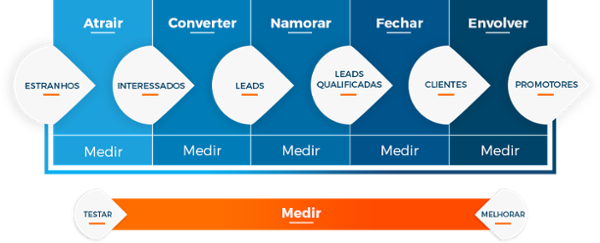
These strategic plans aim to outline all marketing actions designed to attract, convert, and nurture customers throughout their buying journey through relevant content and personalized experiences.
For this very reason, the definition of the proposed actions in a strategic Inbound Marketing plan precisely follows the flow of the Inbound methodology: tactics for attracting visitors, converting those visitors into leads, nurturing those leads, closing qualified leads into customers, and, finally, engaging and retaining existing customers.
Since inbound is a methodology designed to attract your target audience’s interest in your business (it is based on permission rather than interruption), a strategic inbound plan ends up placing a stronger emphasis on organic attraction tactics, lead nurturing, and content marketing as the primary drivers of effectiveness for all actions, whether they are top-of-the-funnel, middle-of-the-funnel, or bottom-of-the-funnel.
The goal of a strategic marketing plan is to map out all the actions the company intends to take to achieve its business objectives within a specific time frame. And while the structure of each plan may vary depending on the specific circumstances of each business, what seems indisputable is its absolutely strategic value for guiding companies’ marketing activities.
The last quarter of the year is the ideal time to develop an annual strategic plan that outlines the marketing activities for the following year. So, if you’re interested in planning your company’s 2022 strategy with the valuable help of a strategic inbound marketing plan, we’d be delighted to assist you along the way!

Content originally published in October 2021.